
The Art of Craft: Behind the Scenes at Peyra Artisan Gelato
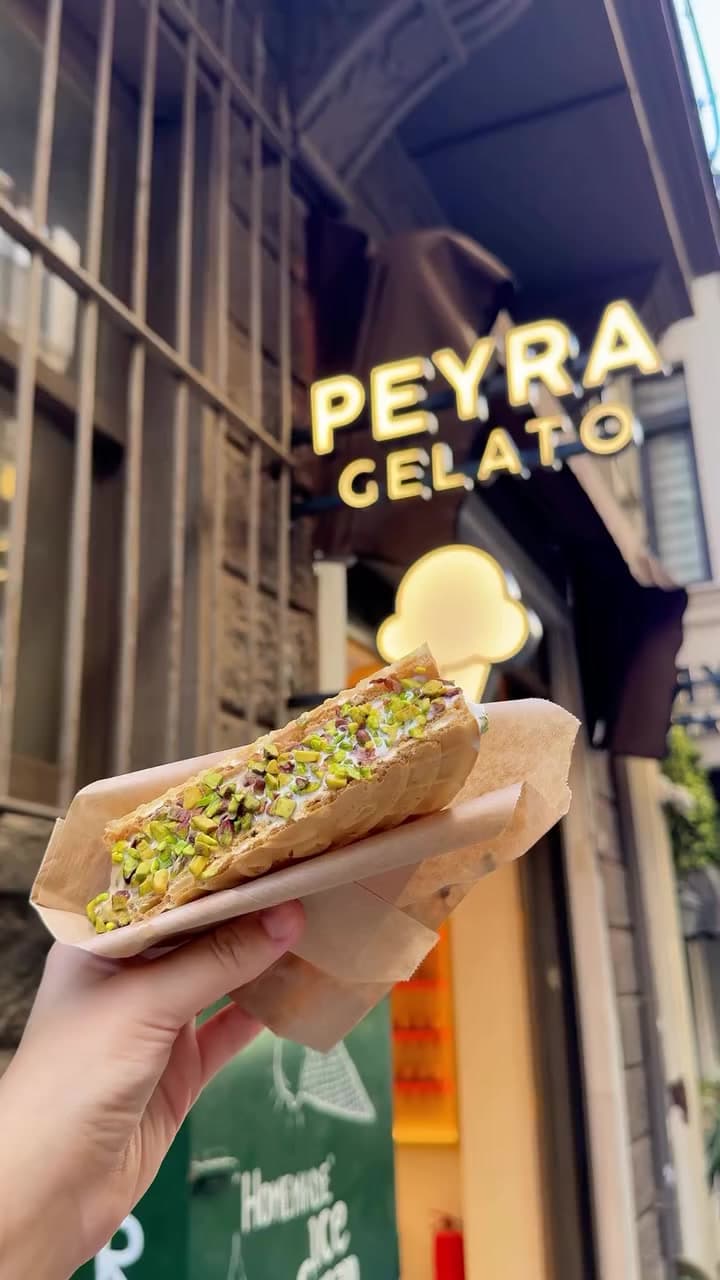
Behind every spoonful lies 18 hours of meticulous handwork. Small batches, never industrial speed. What Artisan Gelato Production Actually Means Artisan gelato
What Artisan Gelato Production Actually Means
Artisan gelato production is one of the most misused phrases in the food industry. Every chain shop with a soft-serve machine and a chalkboard menu claims to be artisan. At Peyra, we want to show you what artisan gelato production actually looks like, the specific choices, the specific timing, the specific equipment, and the specific sourcing decisions that separate genuinely handcrafted gelato from industrially produced imitations wearing an artisan label.
The difference begins at 5:30 in the morning and ends about eighteen hours later. Here is the full story of artisan gelato production at Peyra.
Stage One: Ingredient Selection, 05:30
The first stage of artisan gelato production at Peyra begins before most of Istanbul is awake. At 5:30am, the kitchen team selects and prepares the day's ingredients. This is not a matter of pulling standardised boxes from a storage room, it is an active assessment process. Organic milk from Thrace farms is checked for freshness and fat content. Seasonal fruit is examined for ripeness: a strawberry that is not at peak ripeness today will not produce a sorbet worth eating, and in true artisan gelato production, that fruit will be set aside for another day rather than used regardless.
Single-origin cacao, sourced from Venezuela, Peru, or Madagascar depending on the season, is roasted to order rather than using pre-processed cocoa powder. Pistachio paste is made from whole Gaziantep nuts ground that morning, not from commercial pistachio flavouring. Honey is raw and unfiltered, sourced from Aegean beekeepers. These sourcing decisions are the foundation on which all subsequent artisan gelato production steps depend: the best technique in the world cannot recover a batch made with mediocre ingredients.
Stage Two: Slow Simmering, 85°C
The gelato base is prepared by slow-simmering the milk and cream mixture at exactly 85°C, a temperature precise enough to pasteurise the dairy and dissolve the natural sugars, but controlled enough to avoid the scorched, caramelised note that develops if the temperature rises higher. Most industrial ice cream production uses ultra-high-temperature (UHT) pasteurisation at 140°C or above, which denatures milk proteins and produces a flatter flavour. This careful temperature management is central to artisan gelato production because it preserves the natural complexity of the dairy base, the subtle differences between a Thrace milk and a generic commercial dairy product remain detectable in the finished gelato.
After simmering, the base is cooled for 45 minutes to approximately 4°C. This cooling phase is not a passive waiting period, the temperature must be brought down quickly to prevent bacterial development, while not being cooled so rapidly that the base loses the structural cohesion it needs for the next stages of artisan gelato production.
Stage Three: Fruit and Spice Infusion, 8 to 12 Hours
One of the most distinctive aspects of Peyra's artisan gelato production is the infusion stage. Rather than simply blending fruit puree into the base immediately before churning, the shortcut that most commercial producers use, Peyra infuses whole or roughly crushed fruit into the cooled base and allows it to steep for between eight and twelve hours, depending on the ingredient. This extended infusion extracts flavour compounds that would not be present in a quick blend: the subtle floral notes of Aegean strawberries, the tannic depth of caramelised figs, the resinous warmth of fresh basil. The result is a flavour that tastes like the ingredient at its most concentrated, rather than like a flavoured syrup added to a neutral base. This step is one of the clearest markers of genuine artisan gelato production.
Stage Four: Churning in the Carpigiani, Minus 12°C
The actual churning stage of artisan gelato production takes place in Italian-made Carpigiani machines, the industry reference standard for professional gelatieri worldwide. Peyra churns at -12°C, which is significantly warmer than the -30°C flash-freeze temperature used by industrial producers. This slower churning process incorporates less air into the mixture, what the industry calls overrun, producing a denser, heavier scoop with approximately 23% less volume for the same weight. Industrial ice cream, by contrast, may be up to 100% overrun by volume: half air, half ice cream. The texture difference is immediately apparent: genuine artisan gelato production produces a scoop that resists the spoon slightly, then yields into a dense creaminess. Industrial ice cream collapses immediately and melts in seconds.
Stage Five: Maturation, 4 Hours
The final stage of artisan gelato production at Peyra is a four-hour maturation period at approximately -8°C. During this time, the gelato stabilises: ice crystals equilibrate, flavours integrate, and texture firms to the serving consistency. Rushing this stage, another common shortcut, produces a gelato that tastes slightly raw and has an uneven texture. The four-hour maturation is also the point at which any inclusions (pistachio pieces, fig chunks, chocolate flakes) are incorporated, so that they are evenly distributed throughout the batch rather than sinking. Only after this maturation is the gelato considered ready to serve, the entire artisan gelato production cycle, from ingredient selection to first serving, takes a minimum of eighteen hours.
Sourcing: Where Peyra's Ingredients Come From
Genuine artisan gelato production is inseparable from genuine ingredient sourcing. Peyra's supply chain reflects a commitment to Turkish and regional producers: organic dairy from Thrace farms within 300 kilometres of Istanbul; seasonal fruits from the Aegean coast and the Marmara region; pistachios exclusively from Gaziantep; honey from Aegean and Black Sea beekeepers; spices from Anatolian markets. Single-origin cacao comes from Latin America and Africa via specialist importers who work directly with producing cooperatives. This sourcing philosophy is expensive and logistically demanding, it would be much simpler and cheaper to order standardised bulk ingredients from a national distributor. But genuine artisan gelato production requires genuine ingredients, and there is no shortcut around that reality.
Small Batch Philosophy
The most important constraint in Peyra's artisan gelato production is batch size. Each flavour is made in a batch of approximately 3 to 5 kilograms, enough to fill one or two serving trays. When a flavour runs out on a given day, it runs out: we do not have a warehouse of backup product. This small-batch discipline is what guarantees the freshness that distinguishes Peyra from commercial producers, and it is what makes visiting on a weekday sometimes different from visiting on a Saturday. True artisan gelato production operates on the same principle as a great restaurant: the menu is what the kitchen made today, from what the market offered today, at its best right now.
Crafted in Galata, shared with love, one scoop at a time.